
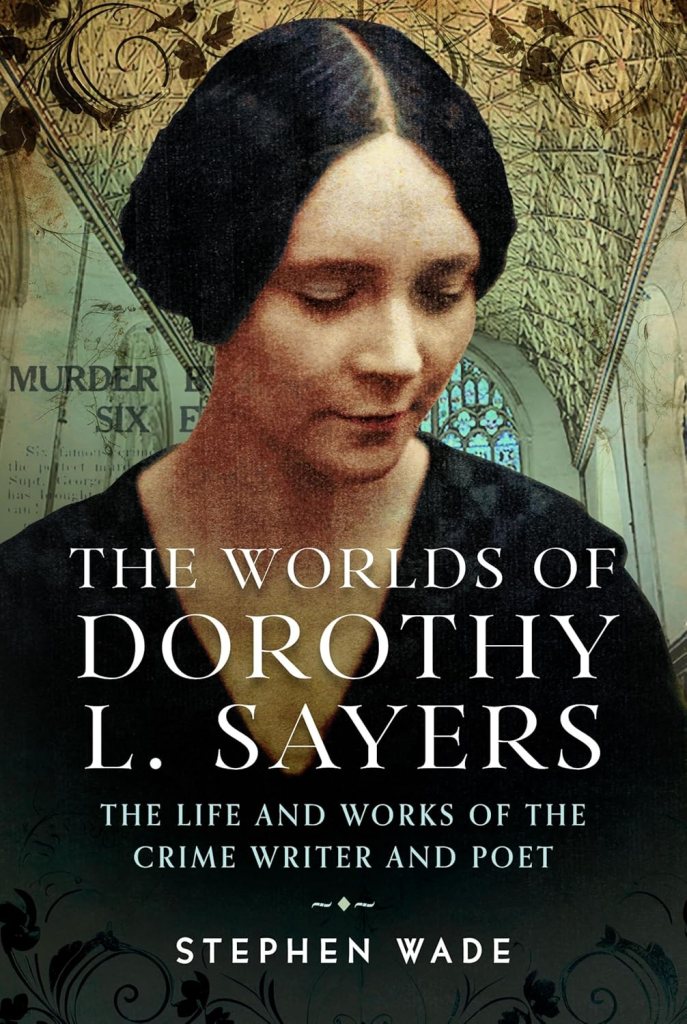
This biography explores Dorothy L. Sayers’ legacy as a crime writer, feminist, scholar, and advertising pioneer, highlighting her lasting influence. Dorothy L. Sayers: the name conjures images of Lord Peter Wimsey’s sleuthing adventures, and masterful translations of Dante. Yet, she was more than a literary luminary of the interwar Golden Age of crime fiction; she was a trailblazer, a feminist, and a scholar, whose influence resonates to this day.
In this new biography, delve into the complexities of Sayers’ life and legacy. From her iconic status as one of the ‘Queens of Crime’ alongside Agatha Christie, Margery Allingham and Ngaio Marsh, to her thought-provoking explorations of feminism and Christian philosophy. Through thematic analysis of Sayers’ writings and beliefs, the author illuminates the depth and breadth of her influence. From her incisive fiction and scholarly interests to her contributions as an advertising copywriter where she penned the line, ‘Guinness is good for you’, Sayers left an indelible mark on literature and beyond.
As a crime writer, historian, and poet, Wade brings his own passion and expertise to this rich investigation. Join him on a journey through the life and works of Dorothy L. Sayers, and discover the enduring legacy of a true literary icon whose influence is rich and productive, mainly in her fiction, but also in many other areas of life.
The Worlds of Dorothy L. Sayers by St
Beyond Lord Peter: Exploring the Many Worlds of Dorothy L. Sayers
The Worlds of Dorothy L. Sayers by Stephen Wade
ISBN: 978-1036111328
Pen and Sword History, 31st August 2025
Rating: 4/5 stars
As a longtime admirer of Dorothy L. Sayers’ Lord Peter Wimsey series, I approached Stephen Wade’s biography with high expectations. I’m pleased to report that whilst it’s occasionally a challenging read, it ultimately delivers a rewarding exploration of one of the 20th century’s most fascinating literary figures. This isn’t a simple chronological life story—instead, Wade takes a thematic approach that illuminates the remarkable depth and complexity of Sayers’ contributions across multiple fields.
A Thematic Approach to a Multifaceted Life
Wade’s decision to organise the biography thematically rather than chronologically is both the book’s greatest strength and, occasionally, a source of difficulty. Rather than following Sayers from birth to death in a straightforward timeline, Wade examines her various roles and interests: crime writer, Christian philosopher, feminist, scholar, advertising copywriter, translator, and dramatist.
This structure works brilliantly for demonstrating the breadth of Sayers’ influence and the interconnected nature of her various pursuits. You come to understand how her Christian philosophy informed her crime fiction, how her feminist principles shaped her portrayal of Harriet Vane, and how her scholarly rigour elevated detective fiction from mere entertainment to serious literature. The thematic organisation allows Wade to explore these connections in ways a purely chronological approach might miss.
However, this approach does occasionally make the narrative feel fragmented. Readers looking for a straightforward “life and times” biography may find themselves flipping back and forth to place events in chronological context. It’s a trade-off, but ultimately one that serves the book’s purpose of examining Sayers’ multifaceted legacy.
Christian Philosophy and Literary Achievement
What I particularly appreciated was Wade’s thoughtful analysis of Sayers’ Christian philosophy and how it informed her work. Too often, writers’ religious beliefs are either ignored entirely or treated as separate from their creative output. Wade demonstrates convincingly that for Sayers, faith and art were inseparable.
Her Christian worldview shaped everything from the moral universe of the Lord Peter novels to her ground-breaking religious drama The Man Born to Be King, which caused controversy by presenting Christ as a fully human character speaking in contemporary English rather than the archaic language audiences expected. Wade explores how Sayers’ theological writings, particularly The Mind of the Maker, reveal a sophisticated understanding of creativity as participation in divine creation.
This analysis also illuminates why Sayers eventually turned away from detective fiction towards translation and religious drama. It wasn’t that she lost interest in Lord Peter; rather, she felt called to use her considerable talents in service of what she saw as more important work. Whether one agrees with that assessment or not, Wade helps us understand Sayers’ perspective and the integrity with which she followed her convictions, even at the cost of popular success.
A Woman Ahead of Her Time
Wade does an excellent job exploring biographical details that reveal Sayers as a woman remarkably ahead of her time. Born in 1893, she came of age during the First World War and lived through enormous social changes. Her personal life was unconventional—she had a son out of wedlock whom she raised secretly whilst maintaining her public career, a decision that required both courage and careful management in an era far less forgiving than our own.
Her feminism, whilst not always aligned with modern perspectives, was genuine and hard-won. The character of Harriet Vane, introduced in Strong Poison and developed through Have His Carcase, Gaudy Night, and Busman’s Honeymoon, represents one of the most nuanced explorations of female independence and intellectual equality in Golden Age detective fiction. Harriet is a successful mystery writer in her own right, fiercely protective of her independence, and unwilling to marry Lord Peter until she can do so as an equal partner rather than a grateful inferior.
Wade explores how Sayers’ own experiences—her Oxford education (she was amongst the first women to receive a degree from the university), her work in advertising, her navigation of literary circles dominated by men—informed her portrayal of educated, professional women who refused to choose between career and personal fulfilment.
Lord Peter and PTSD: Progressive Characterisation
One of the most fascinating aspects Wade highlights is Sayers’ creation of Lord Peter as a character dealing with what we would now call PTSD. This was remarkably progressive for the 1920s and 1930s, an era when shell shock was poorly understood and rarely portrayed with such psychological nuance in popular fiction.
Lord Peter Wimsey isn’t just a charming aristocratic detective; he’s a traumatised veteran of the First World War who uses his detective work partly as a way to cope with his wartime experiences. His nervous breakdown in Whose Body? when confronted with a murdered man whose death echoes wartime horrors, his nightmares, his moments of dissociation—these aren’t mere character quirks but serious attempts to portray the lasting psychological damage of combat.
Wade’s analysis of this aspect of Lord Peter’s character deepens our appreciation for Sayers’ achievement. She wasn’t just writing entertaining puzzles; she was creating a psychologically complex protagonist whose inner life and struggles were as important as the mysteries he solved. This layering of character psychology onto the detective story framework helped elevate the genre and influenced countless writers who followed.
Beyond Detection: Advertising, Translation, and Drama
The thematic structure allows Wade to explore areas of Sayers’ work that might be overlooked in a biography focused primarily on her crime fiction. Her work in advertising at S.H. Benson’s agency, where she created memorable campaigns including the famous “Guinness is good for you” slogan, reveals her versatility and commercial savvy. Wade shows how this work wasn’t just a day job but an arena where she honed her skills at persuasive writing and understanding audiences.
Her translation of Dante’s Divine Comedy, published in three volumes between 1949 and 1962 (the final volume completed after her death by Barbara Reynolds), represents a monumental scholarly achievement. Wade explores how Sayers approached this daunting task with characteristic rigour, teaching herself medieval Italian and immersing herself in Dante scholarship to produce a translation that balanced fidelity to the original with readability for modern audiences.
Her religious dramas, particularly The Man Born to Be King, demonstrate her ability to write compellingly for radio and to make theological ideas accessible to popular audiences. These diverse achievements paint a picture of a writer who refused to be confined to a single genre or medium.
The Book’s Weaknesses
For all its strengths, Wade’s biography does have notable flaws. The writing can feel decidedly scholarly and dry at times, making certain sections rather a slog to get through. Wade is clearly more comfortable with academic analysis than narrative storytelling, and whilst his insights are valuable, they’re sometimes buried in prose that lacks energy and vitality.
More problematically, Wade occasionally takes unnecessary swipes at other writers and dismisses the modern cosy mystery genre with what feels like unwarranted disdain. These disparaging remarks feel out of place and detract from what should be a celebration of Sayers’ achievements. Dorothy L. Sayers doesn’t need other writers torn down to shine—her accomplishments speak for themselves.
The criticisms of contemporary crime fiction also seem to miss the point. Sayers herself was writing what would have been considered “popular” or “commercial” fiction in her time, though she elevated it through her craft. Sneering at modern mystery writers who are doing the same thing feels both unfair and contrary to Sayers’ own democratic approach to literature.
These sections weakened my overall enjoyment of the book and made me question Wade’s critical judgement. A more generous and historically contextualised approach to contemporary crime writing would have served the biography better.
Sayers’ Enduring Legacy
Despite these weaknesses, Wade ultimately succeeds in demonstrating why Dorothy L. Sayers deserves to be mentioned in the same breath as Agatha Christie, even though she didn’t write as prolifically. Whilst Christie produced over 60 novels and numerous short stories, Sayers’ smaller output includes some of the finest examples of detective fiction ever written.
Gaudy Night, in particular, stands as a masterpiece that transcends the genre, exploring themes of intellectual integrity, women’s education, and the nature of work with a depth rarely found in any fiction, let alone mystery novels. The Nine Tailors brilliantly evokes the atmosphere of the Fens and the world of campanology whilst delivering a compelling mystery. Murder Must Advertise draws on Sayers’ advertising experience to create a vivid portrait of 1930s commercial culture.
Wade’s biography helps cement Sayers’ legacy by demonstrating the seriousness of purpose and depth of thought that underlay her work. She wasn’t just entertaining readers (though she did that superbly); she was advancing the detective story as a form capable of addressing serious themes and complex characterisation.
Final Thoughts
Stephen Wade’s The Worlds of Dorothy L. Sayers is recommended for serious fans of Sayers and students of early 20th-century crime fiction. It’s not light reading—the scholarly tone and thematic structure require engagement and concentration. But for those willing to put in the effort, it offers valuable insights into a remarkable woman who made lasting contributions to multiple fields.
The book succeeds in demonstrating the breadth of Sayers’ achievements and the depth of her thinking. Her legacy extends far beyond Lord Peter Wimsey, encompassing Christian philosophy, feminist literature, scholarly translation, and innovative drama. Wade helps us see Sayers whole, in all her complexity and contradiction.
If you’re a casual fan of the Wimsey novels looking for an easy biographical read, this might not be the book for you. But if you want to understand the intellectual foundations of Sayers’ work and appreciate the full scope of her achievements, Wade’s biography—flaws and all—is worth your time.
Dorothy L. Sayers was a literary icon whose influence remains rich and productive. This biography, despite its occasional missteps, helps ensure that her legacy continues to be recognized and celebrated.
Thanks to NetGalley and Pen & Sword for the ARC in exchange for an honest review.
Order any of my books today from Amazon, the Publisher Website or any good retailer





Leave a comment