The Book-Makers: A History of the Book in Eighteen Lives, ISBN: 978-1529920215, Vintage Digital, 2024
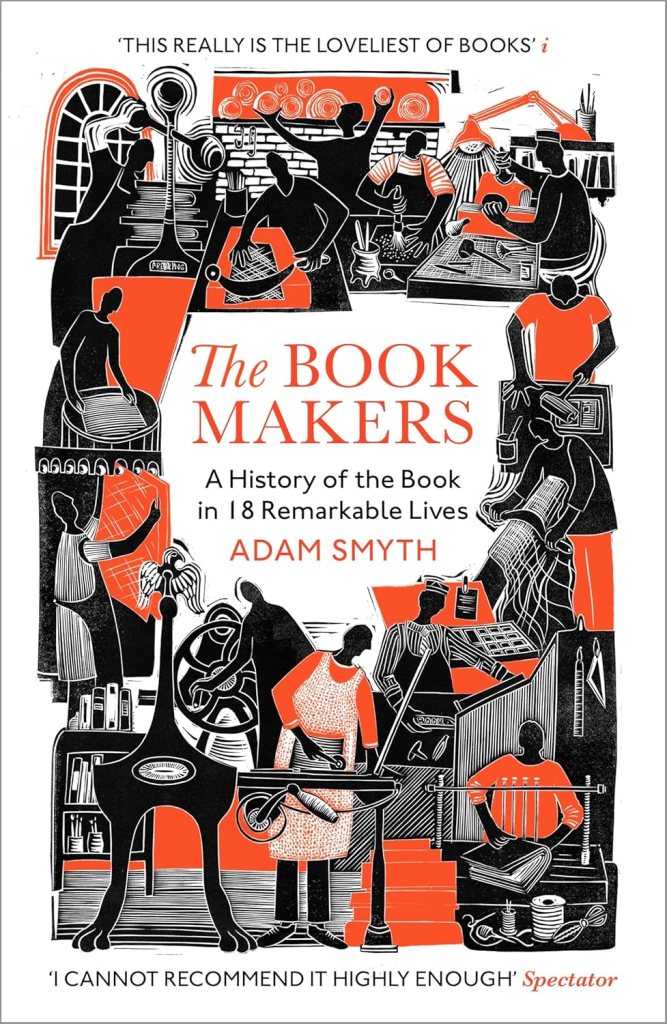
A history of book-making that leaves ink on your fingers — putting people back into the story of the book, taking us inside the print-shop as the deadline looms and the adrenaline flows, from 1492 Fleet Street to 2023 New York. A major new history of the book told through the fascinating lives of the people who made them.
Rating: 4/5 stars
For anyone who loves books — not just reading them, but the physical, historical, and human story of how they came to exist in the form we know — The Book-Makers is a genuine delight. Adam Smyth, Professor of English Literature and the History of the Book at Balliol College, Oxford, brings both scholarly authority and genuine warmth to a history of book-making that traces five hundred years of the printed book through the lives of eighteen remarkable individuals.
People, Not Processes
What sets The Book-Makers apart from more conventional histories of the book is its biographical approach. Rather than offering a sweeping institutional or technological narrative, Smyth puts people back into the story of the book, taking us inside the print-shop as the deadline looms and the adrenaline flows. Each chapter centres on one or two figures whose relationship with books was distinctive, idiosyncratic, and often overlooked by history. The result is a book that feels simultaneously intimate and expansive — you come away with a vivid sense of specific lives while also gaining a richer understanding of the broader story of how books have been made, circulated, and transformed.
Wynkyn de Worde and the Birth of the Bestseller
The opening chapter, devoted to Wynkyn de Worde — William Caxton’s successor and one of the earliest commercial printers in England — is an immediate highlight. Taking us from Wynkyn de Worde’s cheap bestsellers produced in fifteenth-century London, Smyth brings to life a figure who understood, centuries before modern publishing, that books needed to find an audience rather than wait for one. It is a chapter that sets the tone perfectly: scholarly without being dry, specific without being narrow.
Mary and Anna Collett: Cut, Paste, and Devotion
The chapter that stayed with me longest, however, concerns two seventeenth-century sisters whose story I had never encountered before. At Little Gidding, a religious community thirty miles northwest of Cambridge, Mary and Anna Collett laboured over decades with great care and workmanship, cutting and pasting personal editions of the Bible to create a single harmony of the Scriptures. Their Bible harmonies, assembled with knives and scissors and reassembled with images and additional texts, even found favour with King Charles I. What might look at first glance like an act of destruction was, as Smyth convincingly demonstrates, an act of profound and creative devotion. It is the kind of story that makes you see both books and faith in a slightly different light.
Breadth and Accessibility
The Book-Makers offers a new way to understand the story of Western culture’s most important object, and its breadth is genuinely impressive — from early printing and bookbinding through typography, paper-making, lending libraries, and small presses, all the way to the radical democratic culture of contemporary zines. The writing style is accessible throughout, with important terms and concepts generously and unostentatiously glossed in the course of the narrative — a small but meaningful courtesy to readers who are not specialists.
A Minor Caveat
The one limitation worth noting is inherent to the book’s chosen form: because Smyth focuses on one or two lives per chapter, we only get a snapshot of the history — a pivotal moment rather than a complete picture. Readers hoping for a comprehensive, classically structured history of the printed book will not find one here. But that is to misunderstand what The Book-Makers is and does. As a series of vivid, humanising portraits of the people who shaped our relationship with books, it is very close to essential reading.
I received an advance copy of this book via NetGalley.




Leave a Reply