
One of the most persistent rumors about Margaret of Anjou, Queen of England from 1445 to 1461 and 1470 to 1471, is that she had an extramarital affair and that her only son, Edward of Westminster, was illegitimate. The rumor has endured for over five centuries, repeated in histories, novels, and even some scholarly works. But did Margaret actually cheat on King Henry VI with Edmund Beaufort, Duke of Somerset?
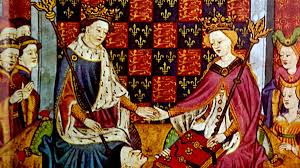
The short answer: Almost certainly not.
This was a piece of political propaganda spread by Margaret’s enemies, the Yorkists, to undermine her position and question her son’s right to the throne. Let’s examine the evidence—or rather, the lack thereof.
The Origins of the Rumour
Margaret of Anjou arrived in England in April 1445 as a fifteen-year-old bride for the twenty-three-year-old King Henry VI. The marriage was part of a peace treaty with France, and from the beginning, it was politically controversial. Margaret brought no dowry; worse, the treaty required England to surrender valuable territories in France, including Maine and Anjou.
For eight years, the marriage remained childless. This was unusual enough to attract comment in an age when producing an heir was a queen’s primary duty. Then, in October 1453, Margaret finally gave birth to a son, Edward of Westminster, at Westminster Palace.
The timing could hardly have been worse. Just months before Edward’s birth, King Henry VI had suffered a catastrophic mental breakdown, falling into a catatonic state where he could not speak, recognize anyone, or conduct any business. He would remain in this condition for over a year.
Edmund Beaufort, Duke of Somerset, was one of Margaret’s closest political allies and advisers. He was also, conveniently for rumor-mongers, young, handsome, charismatic, and had served as Edward’s godfather. The Yorkist faction, led by Richard Duke of York (who stood to inherit the throne if Henry had no legitimate heir), seized on these circumstances to spread whispers that Somerset, not Henry, was the child’s true father.
Why the Rumours Are Unfounded
There are several compelling reasons to dismiss these allegations as political propaganda rather than historical fact:
1. Henry VI Was Mentally Sound at the Time of Conception
Henry’s mental breakdown occurred in August 1453. Edward was born in October 1453, meaning he was conceived around January 1453—a full seven months before Henry’s illness began. At the time of conception, Henry was perfectly capable of fathering a child. The timeline simply doesn’t support the story that Margaret turned to Somerset because her husband was incapacitated.
2. Margaret’s Behaviour Was Not That of a Woman Hiding Adultery
When Margaret realized she was pregnant, she went on pilgrimage to give thanks—hardly the behavior of someone concealing a scandalous affair. She made no attempt to hide her pregnancy or rush the birth. Instead, she celebrated it publicly, as any queen would who had finally produced the desperately needed heir after eight years of marriage.
3. Henry VI Never Doubted His Son’s Paternity
This is perhaps the most important point. Henry VI himself never questioned Edward’s legitimacy. When he recovered from his mental breakdown and was shown his son for the first time, he accepted him as his own child and heir. He enquired about the boy’s godfathers and, according to some sources, made a rather strange comment about Edward having been “fathered by the Holy Ghost”—a remark that has been seized upon as evidence of doubt but more likely reflects Henry’s own piety and his relief at the miraculous birth of an heir after so long.
If Henry had genuine doubts about his son’s paternity, he could have repudiated both Margaret and Edward. Medieval kings had options when it came to unwanted wives and questionable heirs. Henry did neither. He publicly acknowledged Edward as Prince of Wales and his legitimate heir, investing him with the title at Windsor Castle in 1454.
4. The Practical Impossibility of a Secret Royal Affair
Medieval queens were virtually never alone. They lived surrounded by ladies-in-waiting, attendants, servants, guards, and courtiers. Margaret’s household would have included dozens of people who were with her throughout the day and night. A secret affair would have required the complicity or willful blindness of her entire household—an absurdly unlikely scenario.
If Margaret had been conducting an affair with Edmund Beaufort, someone would have known. Someone would have talked. Someone would have used that information for their own advantage, either by blackmailing the queen or by selling the information to her enemies. The fact that no contemporary witness ever came forward with credible evidence speaks volumes. In the fishbowl existence of the medieval court, true secrets were nearly impossible to keep.
5. No Contemporary English Evidence Links Margaret to Somerset Specifically
While there were certainly whispers about Margaret’s fidelity, contemporary English sources do not provide concrete accusations linking her romantically to Edmund Beaufort specifically—at least not during his lifetime. The rumors intensified after Somerset’s death at the First Battle of St. Albans in 1455, when they could no longer be contradicted or challenged.
The one piece of near-contemporary “evidence” is often cited: on March 15, 1461, Prospero di Camulio, the Milanese Ambassador in France, wrote from Brussels mentioning a rumor that Margaret intended to “unite” with Somerset—but this referred to Henry Beaufort, Edmund’s son and successor as Duke of Somerset, not to Edmund himself. This rumor is particularly absurd when you consider that Henry Beaufort was barely more than a teenager in 1455, and his brother Edmund (the 4th Duke of Somerset) was even younger. Camulio himself noted he had little confidence in these rumors, and they proved groundless in any case.
6. Margaret’s Alleged Lovers Keep Multiplying
If we believe all the rumors, Margaret had an astonishingly busy romantic life. Various sources over the centuries have suggested she had affairs with:
- Edmund Beaufort, 2nd Duke of Somerset
- Henry Beaufort, 3rd Duke of Somerset (Edmund’s son—who was barely more than a teenager when his father died)
- Edmund Beaufort, 4th Duke of Somerset (another of Edmund’s sons—even younger)
- James Butler, 5th Earl of Ormond
- Pierre de Brézé, Seneschal of Normandy (a favorite of French writers eager to claim one of their own)
When the list of alleged lovers grows this long, it becomes clear we’re dealing with gossip and propaganda rather than evidence. Medieval chroniclers and modern writers have simply added names to the list based on which men were close to Margaret politically, with no actual evidence of romantic involvement.
Interestingly, there were rumors in Edmund Beaufort’s youth linking him romantically with Katherine de Valois, Henry VI’s mother and the widow of Henry V. But notably, no credible contemporary sources linked Edmund with Margaret of Anjou during his lifetime—the rumors only emerged after his death, when he could no longer deny them.
Why the Rumours Persisted
So if there’s no evidence for the affair, why has the story endured for over five hundred years?
The answer lies in politics and propaganda. The Yorkist faction had everything to gain from spreading rumors about Edward’s illegitimacy. If Edward was a bastard, then Henry VI’s line was extinct, and Richard Duke of York’s claim to the throne became stronger. The rumors served a clear political purpose: they undermined Margaret’s authority as queen, questioned her son’s right to inherit, and painted the Lancastrian government as morally corrupt.
The rumors also reflect a well-established medieval tactic for discrediting powerful women: accuse them of sexual impropriety. This was standard practice throughout the Middle Ages. When enemies wanted to destroy a noblewoman’s reputation and political power, allegations of adultery were the go-to weapon. The list of medieval queens accused of affairs—usually with no credible evidence—is extensive:
- Eleanor of Aquitaine was accused of having an affair with her own uncle, Raymond of Antioch, during the Second Crusade. The accusation was politically motivated and almost certainly false, but it damaged her relationship with her first husband, Louis VII of France.
- Joan of Navarre, stepmother of Henry V, was accused of witchcraft and plotting to kill the king through sorcery—charges that were later admitted to be fabricated to seize her dower lands.
- Eleanor Cobham, Duchess of Gloucester, was accused of witchcraft and treason, forced to do public penance, and imprisoned for life.
- Anne Boleyn would later be executed on charges of adultery with multiple men, including her own brother—charges that most historians now agree were fabricated by Thomas Cromwell to give Henry VIII grounds for annulment.
Margaret of Anjou fits perfectly into this pattern. She was an unusually active and politically engaged queen. She led armies, negotiated treaties, and fought fiercely to protect her son’s inheritance. In the fifteenth century, this kind of female agency was deeply threatening to many men. Accusing her of adultery was a way to delegitimize her political power by attacking her sexual morality—a tactic used against powerful women throughout history.
The rumors about Margaret became increasingly wild and elaborate as the political situation deteriorated. By 1459-60, her enemies were spreading stories that she planned to poison King Henry VI himself and marry her alleged lover Henry Beaufort! This accusation is so absurd it barely deserves refutation—why would Margaret murder her husband and destroy her son’s claim to the throne to marry a man barely out of his teens? The very extremity of the accusation reveals it as desperate propaganda designed to paint Margaret as a monster capable of any crime.
Finally, the story is simply too good not to repeat. A beautiful French queen, a weak and possibly mad king, a handsome duke, a questioned heir, and a kingdom torn apart by civil war—it has all the elements of a compelling historical drama. Shakespeare immortalized these events in his history plays, and later writers have continued to embellish the tale. Fiction has a way of hardening into “fact” over time, especially when the fiction serves someone’s agenda.
The Evidence That Does Exist
What we do know from the historical record is this:
Margaret and Edmund Beaufort were close political allies. This was not unusual—queens needed supporters at court, and Somerset was one of the most powerful nobles in the realm. Margaret granted Somerset an annuity of 100 marks in 1451, recorded as being for “past and future services” and “for the great good will and kindness that he will show [her] in her urgent affairs.” Historian Helen Maurer has plausibly suggested these “urgent affairs” referred to Henry’s mental breakdown, not to a romantic liaison.
Somerset served as godfather to Prince Edward, which was a great honor but also a standard political appointment. The godfather role created a formal bond between the Beaufort family and the royal heir—exactly the kind of alliance Margaret would have wanted to secure support for her son.
Margaret defended Somerset against his enemies, most notably Richard Duke of York, who blamed Somerset for England’s military failures in France. But defending a political ally against rivals does not constitute evidence of an affair.
That’s it. That’s the sum total of actual evidence linking Margaret and Somerset: political alliance, an annuity, a godfather role, and mutual defense against enemies. None of this is remotely suspicious or unusual in the context of medieval politics.
The Real Margaret of Anjou
The persistence of the adultery rumors has done enormous damage to Margaret’s historical reputation. Instead of being remembered as a fierce defender of her son’s rights, a capable military leader (she personally raised and led armies), and one of the most politically astute figures of the Wars of the Roses, she’s been reduced to a scandalous stereotype: the adulterous foreign queen who brought chaos to England.
The truth is far more interesting. Margaret of Anjou was a formidable woman who fought for decades to protect her son’s inheritance in the face of overwhelming opposition. She was politically skilled, militarily capable, and absolutely devoted to Edward of Westminster. She made mistakes—her harsh treatment of defeated enemies alienated potential supporters, and her refusal to compromise with York helped push England into civil war. But these were political and strategic failures, not moral ones.
The question of Edward’s paternity was settled in the fifteenth century by the one person whose opinion actually mattered: Henry VI, who acknowledged him as his legitimate son and heir. Everything else is propaganda, gossip, and historical fiction.
Conclusion
Did Margaret of Anjou cheat on her husband? Almost certainly not. The rumors were spread by her political enemies to undermine her position and question her son’s legitimacy. There is no credible evidence to support the allegations, and substantial evidence against them: Henry was capable of fathering a child at the time of Edward’s conception; Margaret’s behavior was not that of a woman hiding adultery; Henry himself never doubted his son’s paternity; and no contemporary sources provide reliable evidence of an affair.
The story has persisted not because it’s true, but because it’s useful—to the Yorkists in the fifteenth century, to writers seeking a dramatic narrative, and to those who remain uncomfortable with the idea of a politically active, powerful medieval queen who refused to quietly accept defeat.
Margaret of Anjou deserves better than to be remembered primarily for a scandal that never happened. She was a complex, fascinating historical figure whose real story—of political struggle, maternal devotion, military leadership, and ultimate defeat—is far more compelling than the fiction that has too often replaced it.
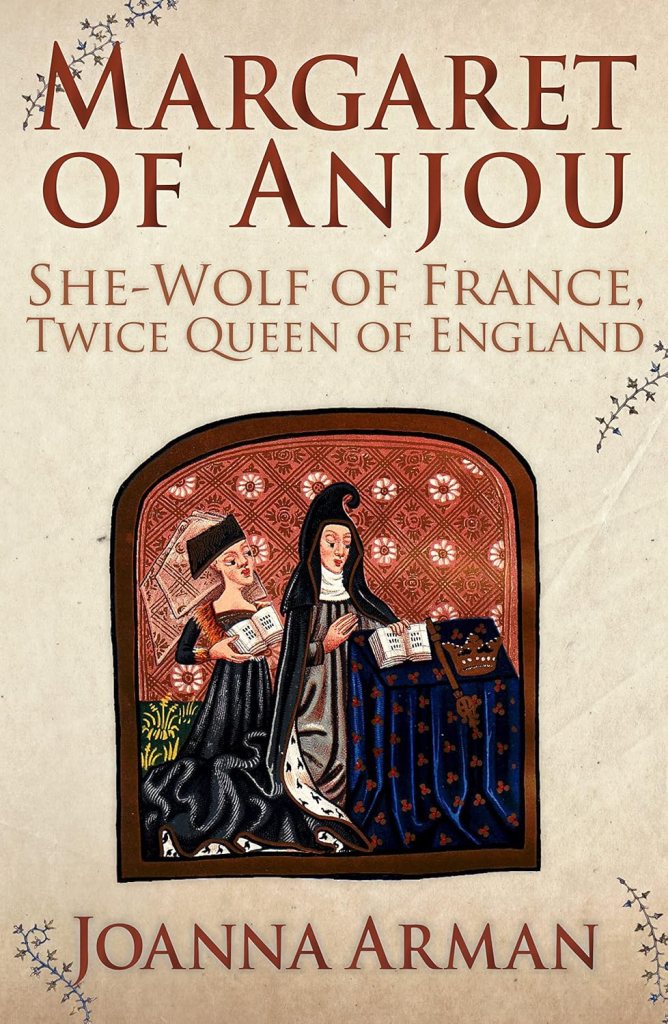
For a fuller exploration of Margaret of Anjou’s life and reign, see my book Margaret of Anjou: She Wolf of France, Twice Queen of England where I examine the documentary evidence for her actions and motivations during the Wars of the Roses.

 The History Lady
Leave a comment